
Tooth Extraction: When & Why
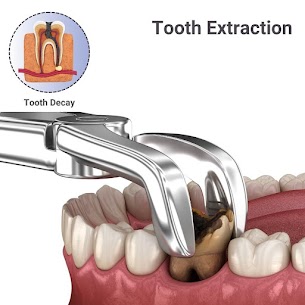
Nobody Wants to Lose a Tooth
Dentists do not want you to lose one either. Every treatment plan starts with the question: can this tooth be saved? Root canals, crowns, and bonding exist precisely because preserving natural tooth structure is almost always the better outcome. But there are situations where keeping a damaged tooth causes more harm than removing it.
When Extraction Becomes the Right Call
A tooth may need to come out when:
- Decay has reached too deep — The infection has destroyed enough structure that a crown or filling can no longer hold. Leaving it risks spreading the infection to adjacent teeth or into the jawbone.
- A fracture runs below the gumline — Cracks that extend into the root cannot be repaired. The tooth becomes a source of chronic pain and bacterial entry.
- Severe gum disease has loosened the tooth — Advanced periodontal disease erodes the bone that holds teeth in place. Once support is gone, extraction followed by restoration is the most predictable path.
- Overcrowding requires space — In orthodontic cases, strategic extraction creates room for remaining teeth to align properly.
- An impacted wisdom tooth is causing problems — Partially erupted third molars trap bacteria and press against neighbouring teeth.
What Happens During the Procedure
At Enbite Multi-speciality Dental Studio, Dr. Bharti Bhadoria follows a structured, minimally invasive approach:
- Diagnostic Imaging — X-rays or digital scans map the tooth’s root shape, position, and proximity to nerves before anything begins.
- Local Anaesthesia — The area is thoroughly numbed. You should feel pressure but not pain during the procedure.
- Controlled Loosening — The tooth is gently rocked within its socket using specialised instruments to widen the ligament space. This avoids unnecessary bone removal.
- Clean Extraction — Once mobile, the tooth is lifted out. The socket is inspected and cleaned of any debris or infected tissue.
- Socket Management — Depending on the case, the site may be packed with a clot-stabilising material or sutured to promote clean healing.
The entire process typically takes 20–40 minutes for a straightforward extraction.
Recovery: What to Expect
The first 48 hours matter most:
- Bite gently on gauze for 30–45 minutes after the procedure to help a blood clot form
- Avoid spitting, straws, and smoking — Suction can dislodge the clot and cause a painful dry socket
- Stick to soft foods — Yoghurt, soup, mashed vegetables, and smoothies for 2–3 days
- Apply a cold compress to the outside of your cheek (20 minutes on, 20 minutes off) to manage swelling
- Take prescribed medication on schedule, not just when pain appears
Most patients return to normal activity within 3–5 days. Dr. Bhadoria provides written post-operative instructions specific to your case at the end of every appointment.
What Comes After the Gap?
An extraction is not the end of the story — it is a transition point. Leaving a gap untreated can lead to adjacent teeth shifting, bite changes, and bone loss over time. Restoration options include:
- Dental Implants — A titanium post placed in the jawbone, topped with a crown. The most durable long-term solution.
- Fixed Bridge — A prosthetic tooth anchored to the teeth on either side of the gap.
- Removable Partial Denture — A less invasive, lower-cost option for patients who are not candidates for implants.
At Enbite, extraction and restoration are planned together from the start — so your treatment has a clear beginning, middle, and end.
The Goal Is Always Your Long-Term Health
No one looks forward to an extraction. But when it is the right decision, a well-executed procedure with a clear restoration plan leads to better outcomes than holding onto a tooth that is actively causing damage. At Enbite Multi-speciality Dental Studio in Akota, Vadodara, Dr. Bharti Bhadoria and the team ensure every step — from diagnosis to recovery to restoration — is handled with precision and honest communication.
Before extraction, explore whether root canal treatment can save the tooth. After extraction, full-mouth rehabilitation can restore your complete smile. Concerned about a cavity that hasn’t progressed that far? Read about early cavity intervention. Explore all treatments available at Enbite or meet Dr. Bharti Bhadoria. Book a consultation to discuss your options.